Sheerness Dockyard Church
Award-winning heritage restoration delivered with exceptional craftsmanship & conservation leadership


Category: Heritage & Iconic

Sector: Public Services

Duration: 84 weeks

Architect: Project - Hugh Broughton Architects, Conservation - Martin Ashley Architects

Quantity Surveyor: PT Projects
A landmark restored
Sheerness Dockyard Church is a Grade II* listed landmark within the former Royal Naval Dockyard on the Isle of Sheppey, described by Historic England as one of the most significant buildings on their at‑risk register. Severely damaged by fire in 2001, the building stood roofless for two decades. Coniston delivered the £5.9m restoration on behalf of the Sheerness Dockyard Preservation Trust, transforming the ruin into a café, co‑working space, event and exhibition venue, and community support hub for young people.
Rebuilding after the fire
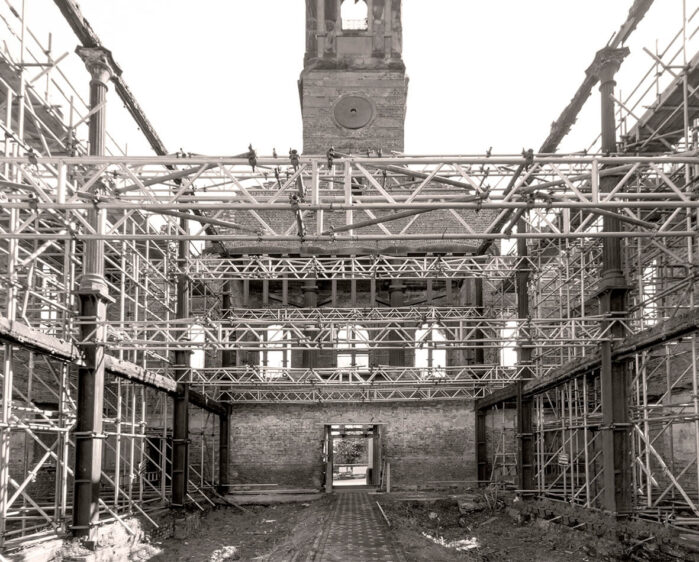
The church is one of the most significant surviving buildings from the historic dockyard and had been left structurally vulnerable following extensive fire damage. Large areas of roof, tower and internal fabric were lost, while surviving masonry and historic features required careful consolidation.
The project demanded full reconstruction of key elements, including the clocktower and roof structure. As a National Lottery Heritage Fund-supported scheme, it required close coordination with multiple funding bodies and stakeholders throughout.
The project began during the COVID‑19 pandemic and was delivered adjacent to the entrance of Sheerness Docks, adding operational and logistical constraints to an already complex scheme. The presence of an estimated 15,000 yellow‑tailed scorpions in the dockyard walls and grounds introduced additional risk and conservation sensitivities on site.




Reconstructing and conserving the church
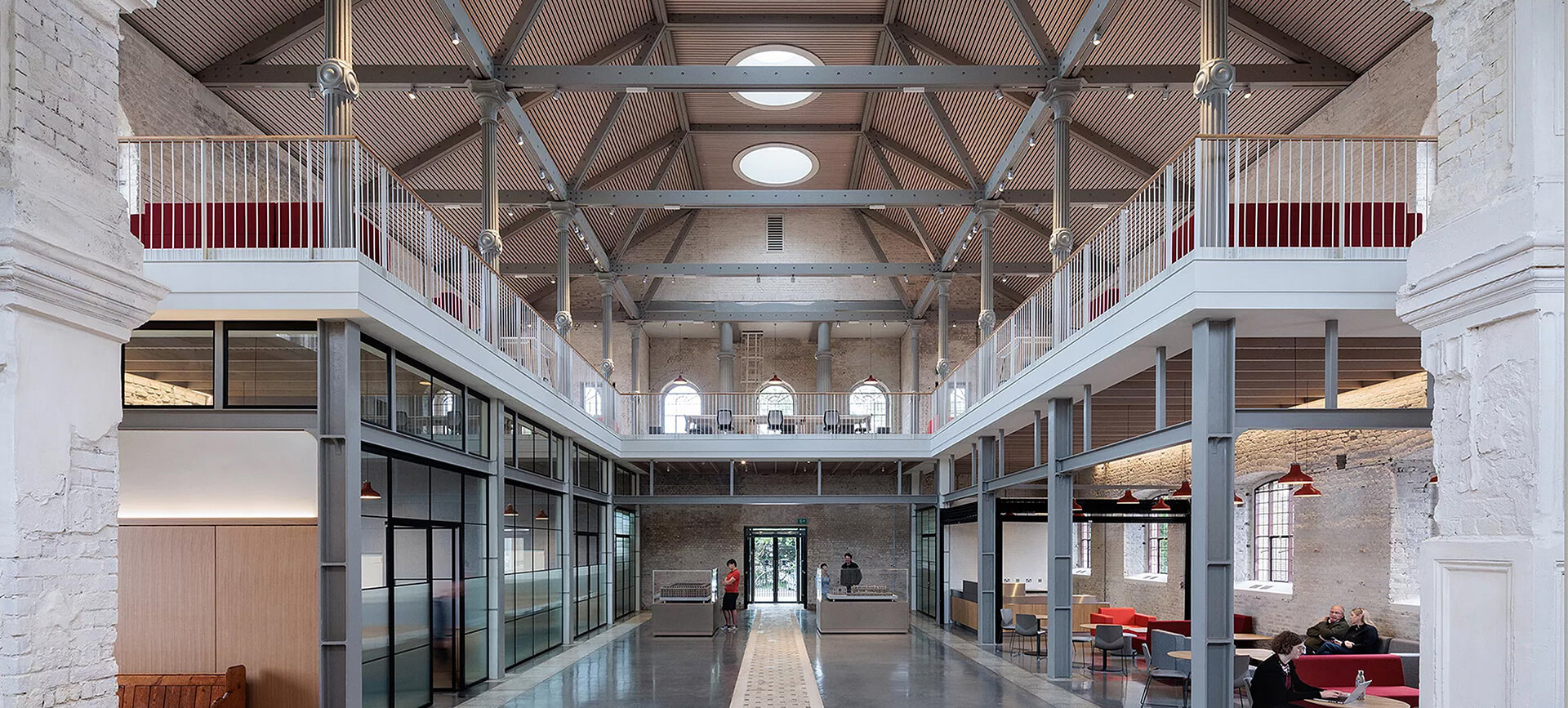
Working closely with Hugh Broughton Architects and conservation specialists Martin Ashley Architects, Coniston planned, managed and delivered extensive external repairs and complex structural reconstruction. The fire‑damaged clocktower was carefully dismantled, each stone numbered and recorded, and then sympathetically rebuilt using as much original stonework as possible. The new roof was reinstated to match the original early 19th‑century profile, using steel and timber flitch beam trusses, with rendered parapets, new windows, doors and decorative railings reinstating the church’s formal presence. Internally, original features such as the cantilevered stone stair and fluted cast‑iron columns were conserved or reconstructed, while surviving areas of historic plaster were stabilised and left exposed. Original encaustic tiles from the altar, discovered buried in debris, were salvaged, cleaned and re‑used within the new nave floor, physically linking old and new fabric.
A conscious decision was made to utilise as much local labour, subcontractors and suppliers as possible, supporting the surrounding community throughout construction. Contemporary insertions were clearly articulated, including polished concrete floors with underfloor heating, glazed meeting rooms, open‑plan workspace at gallery level and discreetly integrated lighting, acoustic treatment and fire systems. Stakeholder management was straightforward, as many members of the Board of Trustees were near neighbours, enabling a highly collaborative and responsive project culture focused on leaving a lasting legacy for Sheerness.
A new life for the Dockyard Church
The project has returned a long derelict landmark to public use, securing its future and reopening it as a café, event space, exhibition venue and coworking hub.
The quality and sensitivity of the restoration have been recognised with major national awards, including the RIBA Reinvention Award, RIBA National Award 2025 and RICS National Project of the Year.
The building now serves as a community asset, and a leading example of heritage led regeneration.

"Coniston’s careful reconstruction of the church’s tower and exterior brought a nationally significant landmark back from the brink. Before Coniston it was clinging on for dear life. Coniston kept to the philosophy to restore the exterior back to its early 19th century form. I think this project proved, if you can rescue this building there's no excuse for letting any other neglected historic building fall down."
Will Palin, CEO of Barts Heritage
Client lead on the Sheerness Dockyard Church project
"This is a powerful example of heritage-led regeneration, a project that reinvigorates history while equipping a community with space and purpose. "
RIBA
"The team achieved a delicate balance, working together since 2017 to deliver this exemplary heritage-led regeneration scheme. Innovative techniques have preserved the church’s exterior and lost elements have been reconstructed. Inside, original features have been maintained, striking a balance with new functions to create a welcoming space for community engagement."
RICS
"This restoration has faithfully preserved the church's historical integrity while creating a dynamic, future-focused space for social empowerment."
Kerry Gibbs MRICS
RICS Awards judge
References
Sheerness Dockyard Preservation Trust
Royal Institution of Chartered Surveyors
Hugh Broughton Architects
Awards
RICS UK Project of the Year 2024
RICS Heritage Project of the Year 2024
RIBA South East Awards Building of the Year 2025
RIBA South East Awards Project Architect of the Year 2025
RIBA South East Awards Conservation 2025
RIBA Reinvention Award 2025
Civic Trust Award - Highly Commended 2024