Maison Dieu, Dover
Award-winning project to reawaken a historic civic building


Category: Heritage & Iconic

Sector: Civic / Public

Duration: 111 weeks

Architect: Haverstock

Quantity Surveyor: DR Nolans
Restoring a civic landmark for modern use
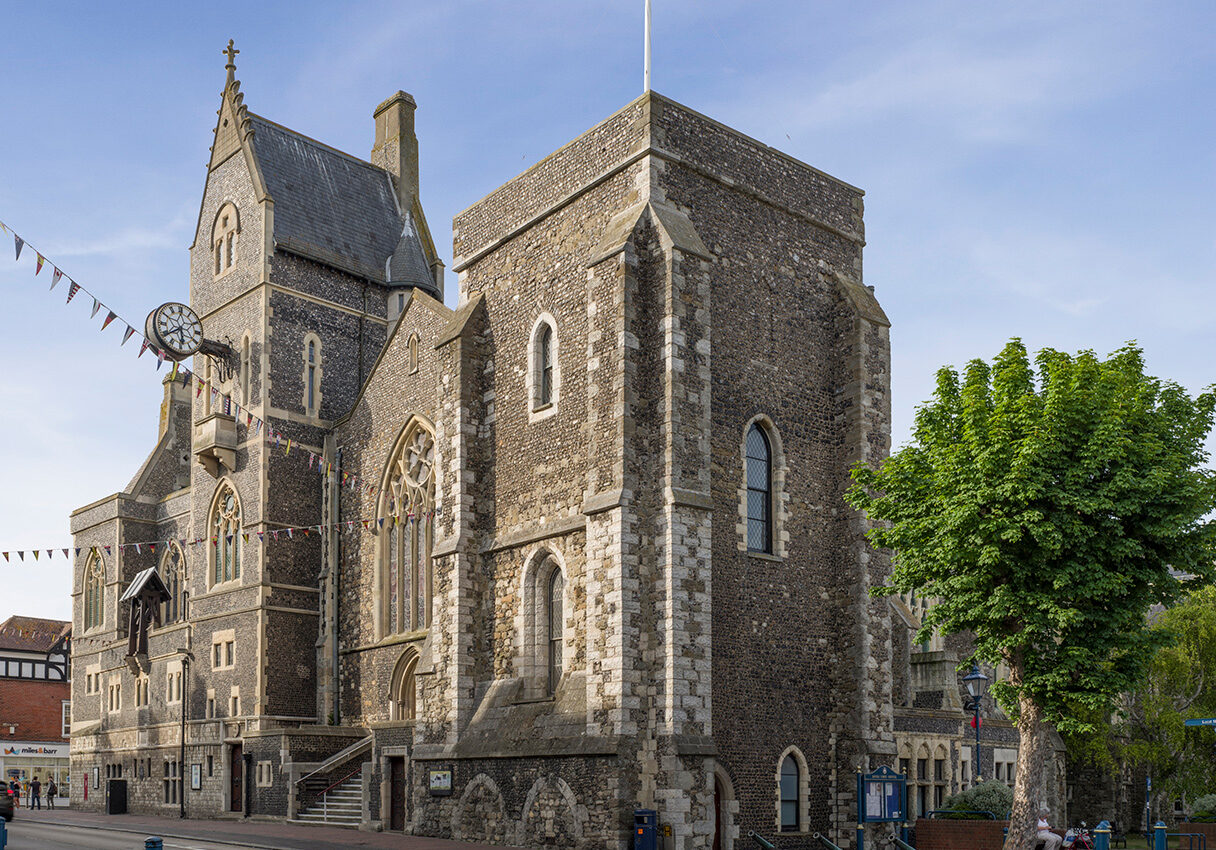
Founded in 1203 as a place of hospitality for pilgrims travelling to Canterbury, the Maison Dieu has evolved over more than 800 years from medieval hospital to naval victualling yard, and later Dover’s Town Hall.
Today, the Grade I listed building, also a Scheduled Ancient Monument, forms one of the most historically significant civic complexes in the South East.
Working for Dover District Council, Coniston delivered a comprehensive programme of restoration, refurbishment and reconfiguration to bring the building back into active public use. The works included roof and façade repairs, conservation of historic fabric, and the renewal of windows, doors and internal finishes throughout.
A new lower ground floor entrance was formed, alongside internal reordering to improve accessibility and usability, including new lifts and upgraded building services. New catering kitchens and public facilities were also introduced to support the building’s long-term civic and cultural use.
At the centre of the scheme, the Mayor’s Parlour and Connaught Hall were carefully restored, including the reinstatement of William Burges’ original decorative scheme.
The Mayor’s Parlour suite has now been adapted as a holiday let, reconnecting the building with its original purpose and providing a source of self-sustainability.




Working within a building of the highest significance
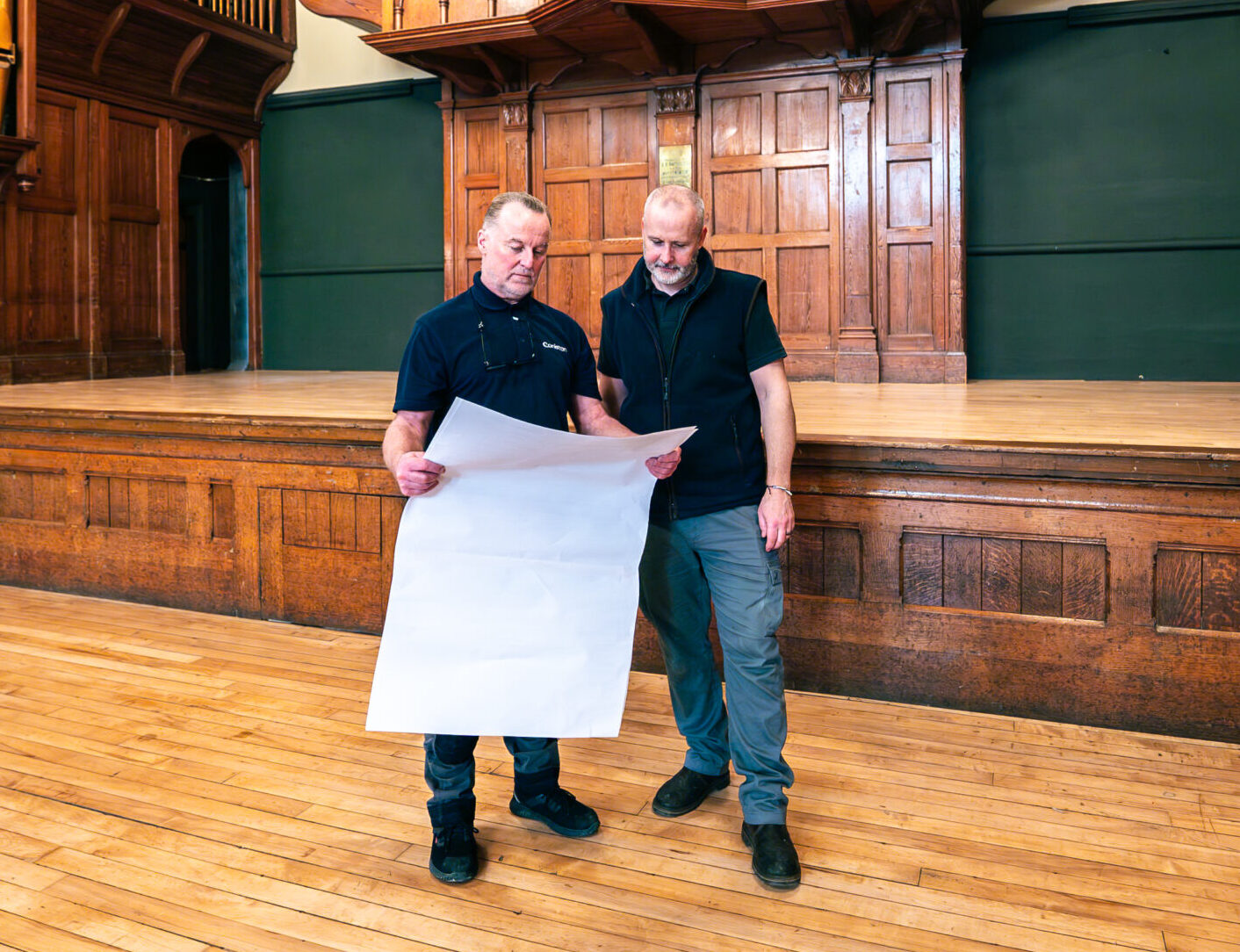
Working within a building of exceptional historic importance required a measured and collaborative approach throughout.
The site combines medieval fabric with significant Victorian interventions by William Burges, whose work defines many of the building’s most distinctive interiors.
Part of the Maison Dieu is designated as a Scheduled Ancient Monument, with the remainder Grade I listed, placing the highest level of scrutiny on all works.
The formation of the new lower ground floor entrance introduced significant structural complexity. Extensive temporary works were required to support the existing façade and floors while new structural elements were introduced. Excavation for the new lift pit also required specialist water control measures due to the proximity of the river, alongside continuous archaeological supervision.
Externally, repair works demanded close coordination with the conservation architect and listed building officer, particularly in areas such as masonry repair, chimney rebuilding and repointing, where materials and detailing required careful approval.
Internally, the challenge was to restore highly significant decorative interiors while upgrading the building to meet modern standards of access, safety and use.

A collaborative delivery
Coniston approached the project with a focus on sequencing, craftsmanship and close collaboration with the client and design team.
Initial works prioritised stabilisation and repair of the building envelope, including roof renewals and façade conservation, ensuring the structure was secure before progressing internally.
The new entrance and lift infrastructure were delivered through carefully designed temporary works and controlled excavation, allowing structural interventions to be undertaken safely within a sensitive historic context.
Internally, works were phased to balance conservation with modernisation. Existing finishes were repaired or renewed where appropriate, while new services, including lighting, fire and security systems, were integrated discreetly throughout the building.
Particular attention was given to the restoration of the Mayor’s Parlour and Connaught Hall. Decorative schemes were reinstated to reflect Burges’ original designs, requiring specialist craftsmanship and a high level of detail.


A building brought back into public life
The Maison Dieu has been transformed into a fully accessible and revitalised civic building, while retaining the character and significance of its historic fabric.
The restored interiors, particularly within the Mayor’s Parlour and Connaught Hall, demonstrate the quality and care applied throughout the project.
For the first time in its history, the building is now open daily to the public, supporting a wide range of civic, cultural and community uses.
The introduction of the Landmark Trust accommodation adds a new layer of use, allowing visitors to experience the building in a way that reflects its original purpose as a place of hospitality alongside adding opportunities for sustainability.
The project has been recognised through industry awards, including Civic Trust and AABC Conservation Awards, alongside short listings for Museum & Heritage Awards.
More importantly, it has re-established the Maison Dieu as a central part of Dover’s civic life, with strong public engagement and a renewed sense of local pride.

"The amount of work by all those involved is quite simply staggering… the transformation that has taken place has brought this magnificent building back to life"
Cllr Trevor Bartlett,
Leader of Dover District Council
"This is the council’s biggest restoration project to date… bringing one of the most significant civic heritage buildings in the country back into use."
Dover District Council
(project statement)
References
Maison Dieu
The Landmark Trust
https://www.landmarktrust.org.uk/properties/mayors-parlour/#overview
Awards
Won
Civic Trust Award 2026
AABC Conservation Award 2026
Shortlisted
Museum & Heritage Awards – Community Engagement Programme of the Year
Museum & Heritage Awards – Restoration or Conservation Project of the Year